
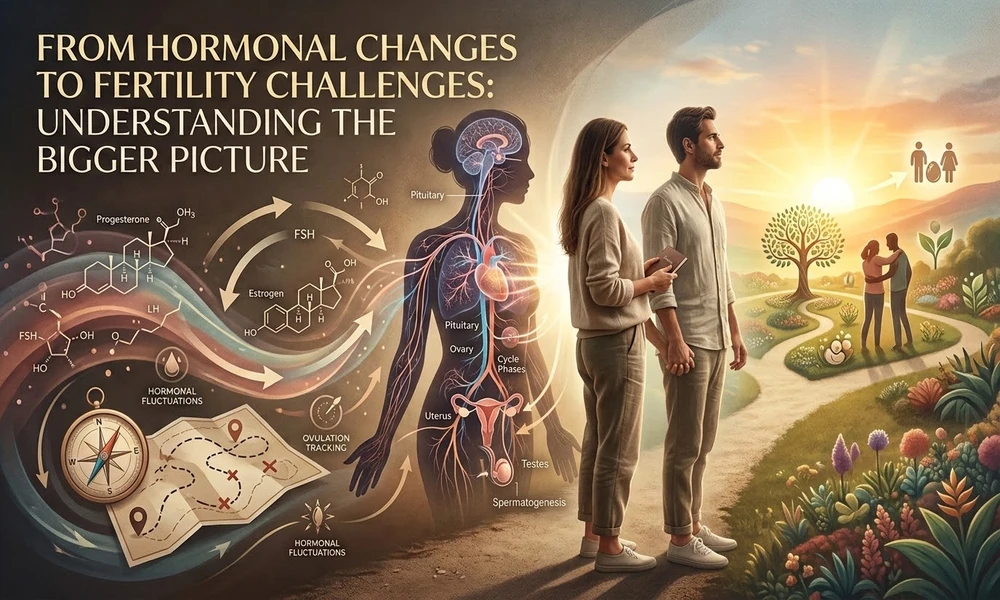
Hormones affect far more than reproductive cycles. They help regulate energy, sleep, appetite, mood, muscle mass, body composition, and many reproductive changes. When hormone patterns shift, the effects can appear gradually. Some people notice irregular periods, lower libido, unexplained weight changes, fatigue, acne, hair changes, or difficulty conceiving.
Reproductive health is also closely tied to metabolic health. Blood sugar regulation, insulin sensitivity, thyroid function, stress hormones, and body weight can all affect ovulation, sperm health, menstrual regularity, and long-term fertility planning. Understanding these connections can help adults make informed choices about testing, treatment, prevention, and family-building options.
Hormones as the Body’s Communication System
Hormones act as chemical messengers. They travel through the bloodstream and signal organs and tissues to carry out specific functions. Estrogen, progesterone, testosterone, thyroid hormones, insulin, cortisol, follicle-stimulating hormone, and luteinizing hormone all help maintain balance across the body.
Because hormones interact with one another, a shift in one system can affect another. Thyroid dysfunction, for example, may influence menstrual cycles, energy levels, and metabolism. Insulin resistance can affect ovarian hormone signaling and contribute to irregular ovulation. Chronic stress may also influence cortisol patterns, sleep, appetite, and reproductive hormone balance.
Not every hormonal change signals a medical problem. Puberty, pregnancy, postpartum recovery, perimenopause, menopause, and aging all involve expected hormonal transitions. The key is knowing when symptoms may be part of a normal life stage and when they may point to an issue that needs medical evaluation.
Reproductive Health Changes Across Adulthood
Reproductive health changes throughout adult life. In women, fertility is influenced by egg quantity and quality, ovulation regularity, uterine health, fallopian tube function, and overall hormonal balance. In men, fertility depends on sperm count, sperm motility, sperm shape, testosterone levels, and overall health.
Age matters, but it is not the only factor. Lifestyle, chronic medical conditions, medications, body weight, sleep, stress, environmental exposures, and metabolic health can all affect reproductive function. Some people notice clear symptoms. Others only discover a concern after trying to conceive.
For people thinking about future family planning, fertility preservation may be part of the conversation. Egg freezing fertility care, including information provided by Perch Fertility, is one example of how reproductive planning can intersect with age, career timing, medical treatment, or personal circumstances. It does not guarantee a future pregnancy, but it may be an option to discuss with a qualified fertility specialist.
Metabolism and Fertility Are Closely Linked
Metabolism is the way the body converts food into energy, stores fuel, manages blood sugar, and regulates body composition. These processes affect reproductive health because the body needs enough energy and stable internal signals to support ovulation, hormone production, and pregnancy.
Insulin plays a central role in this connection. When cells become less responsive to insulin, the body may produce more insulin to keep blood sugar controlled. Higher insulin levels can influence androgen production and disrupt ovulation in some people. This is one reason insulin resistance is often discussed in relation to polycystic ovary syndrome, irregular cycles, and fertility concerns.
Body weight can also affect fertility, but the relationship is not as simple as weight alone. Rapid weight loss, very low body fat, undernutrition, obesity, and high inflammation may all disrupt reproductive hormones. A balanced approach usually focuses on metabolic markers, nutrition quality, movement, sleep, and sustainable habits rather than appearance or short-term dieting.
Common Signs of Hormonal Imbalance
Hormonal imbalance can look different from person to person. Common signs may include irregular menstrual cycles, heavy or very light periods, hot flashes, night sweats, acne, increased facial hair, hair thinning, low libido, erectile changes, fatigue, mood shifts, and sleep disruption. Weight gain or difficulty losing weight may also be part of the picture.
These symptoms can overlap with many conditions. Fatigue may be linked to thyroid disease, anemia, depression, sleep apnea, stress, or low testosterone. Irregular periods may be related to PCOS, perimenopause, thyroid dysfunction, elevated prolactin, or changes in body weight. That overlap is why careful evaluation matters.
Infertility and hormonal imbalance treatment, including care offered through Newton-Wellesley Obstetrics & Gynecology, often begins with a detailed history, physical exam, and targeted testing. Depending on the situation, evaluation may include menstrual history, ovulation tracking, hormone labs, thyroid testing, ultrasound imaging, semen analysis, and a review of medications or underlying health conditions.
The Role of Stress, Sleep, and Lifestyle
Stress does not cause every fertility or hormone concern, but it can influence the systems that support reproductive health. Ongoing stress may affect cortisol, appetite, blood sugar regulation, inflammation, and sleep quality. These changes can make existing hormonal or metabolic concerns more noticeable.
Sleep is another key factor. Poor sleep can affect insulin sensitivity, hunger hormones, testosterone levels, mood regulation, and recovery. Adults who regularly sleep too little may find it harder to maintain steady energy, manage weight, or support healthy hormone rhythms.
Lifestyle changes are not a cure-all, but they can help create a stronger foundation. Regular movement, balanced meals, adequate protein, fiber-rich carbohydrates, healthy fats, hydration, and consistent sleep routines may support metabolic and hormonal stability. The best approach is usually individualized, especially for people with PCOS, thyroid disease, diabetes, endometriosis, low testosterone, or a history of pregnancy loss.
Weight Management as a Metabolic Health Tool
Weight management often comes up in reproductive health, but it should be handled with care. The goal is not simply to reach a certain number on the scale. A more useful goal is to improve metabolic function, including blood sugar patterns, insulin sensitivity, inflammation, blood pressure, cholesterol, energy, and physical strength.
For some people, modest weight changes can improve ovulation regularity or hormone markers. For others, the priority may be preventing weight cycling, improving nutrition, building muscle, or treating an underlying condition. Very restrictive diets can backfire by increasing stress, disrupting menstrual cycles, or making long-term consistency harder.
Metabolic health and weight management programs, including those associated with PhySlim, may be relevant for adults who need structured support around body composition, energy balance, and health markers. In the context of fertility, weight-related care is most useful when it is evidence-informed, realistic, and coordinated with medical evaluation rather than treated as a stand-alone solution.
Fertility Challenges Often Have Multiple Causes
Fertility challenges are common, and they are not always tied to one clear cause. Sometimes the issue involves ovulation. Other times, it may involve sperm health, fallopian tube blockage, endometriosis, uterine fibroids, age-related egg quality changes, thyroid disease, or unexplained infertility.
Because several factors can contribute, both partners are often evaluated when pregnancy does not happen after an expected period of trying. Testing may help show whether ovulation is occurring, whether sperm parameters are within range, whether the uterus and fallopian tubes appear healthy, and whether hormone levels suggest a treatable imbalance.
The emotional side of fertility challenges matters too. Uncertainty can be stressful, especially when symptoms are vague or test results are unclear. Education, supportive care, and realistic timelines can help people make decisions without feeling rushed or blamed.
Testosterone, Aging, and Reproductive Wellness
Testosterone is often associated with male health, but it plays roles in both men and women. In men, testosterone supports libido, erectile function, sperm production, muscle mass, bone density, red blood cell production, mood, and energy. In women, smaller amounts of testosterone may influence libido, energy, and muscle maintenance.
Testosterone levels can change with age, chronic illness, medications, sleep disruption, obesity, and stress. Symptoms of low testosterone can include reduced libido, fatigue, lower muscle mass, mood changes, and difficulty recovering from exercise. Symptoms alone are not enough for a diagnosis, though. Lab testing and clinical evaluation are needed because other conditions can cause similar concerns.
A customized TRT therapy plan, including hormone therapy and wellness care from Lions OpTimal Health, may be considered when low testosterone is confirmed and treatment is medically appropriate. Testosterone therapy requires careful monitoring because it can affect fertility, red blood cell levels, cardiovascular risk factors, and hormone balance. Men who want future fertility should discuss this with a clinician before starting treatment.
Conclusion
Hormones, metabolism, and reproductive health are deeply connected. Changes in one area can influence the others, which is why symptoms such as irregular cycles, fatigue, weight changes, low libido, or difficulty conceiving should be viewed in context rather than in isolation.
A bigger-picture approach looks at age, medical history, lifestyle, lab results, reproductive goals, and metabolic health together. With the right evaluation and guidance, adults can better understand what their bodies may be signaling and make informed choices about fertility, hormone care, and long-term wellness.
